
Fragmented notes on truth, interpretation, and the unexpressed in LEGO® Serious Play®
Fragments. Not an essay yet. Not resolved. Not meant to be.

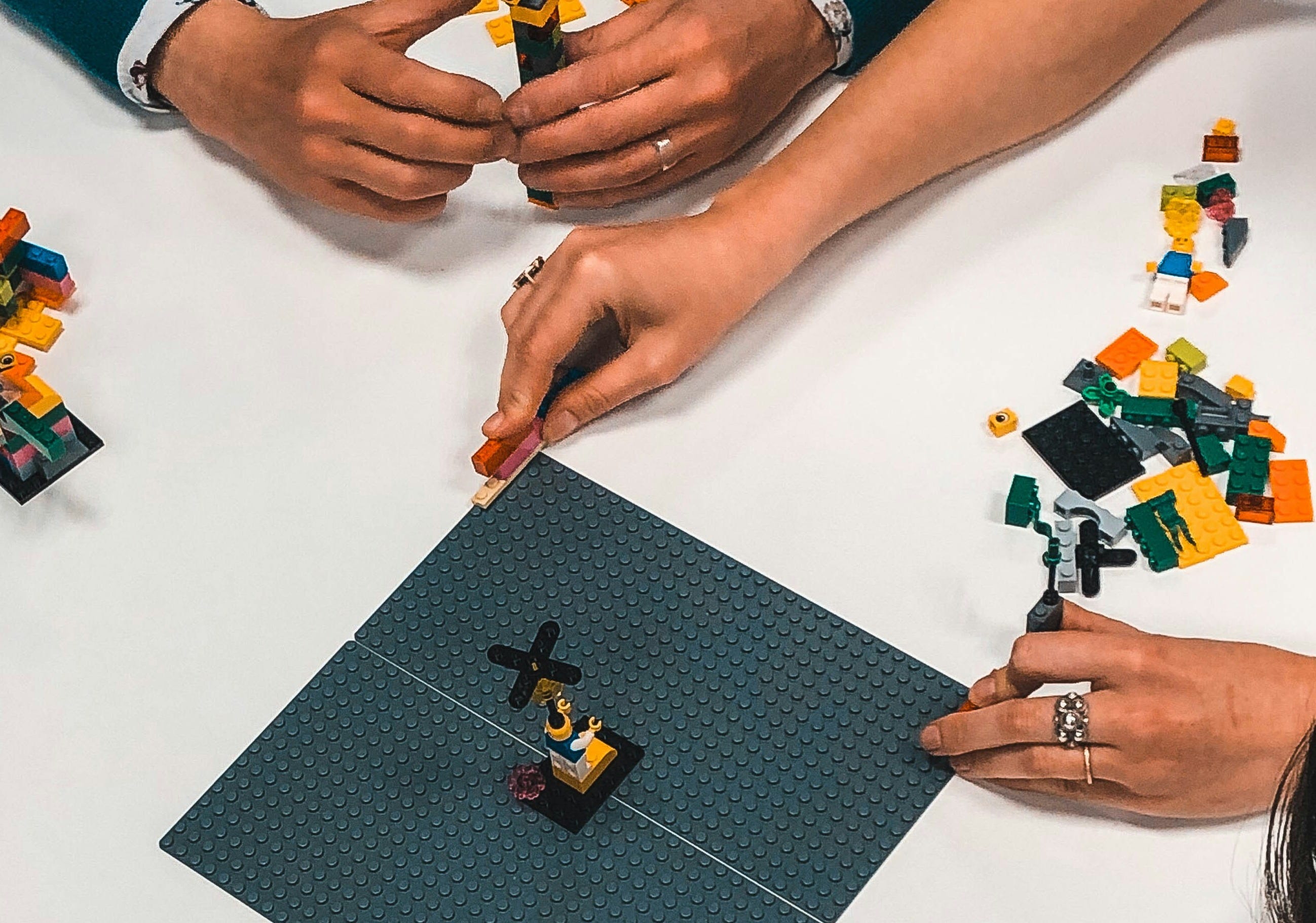
The model finishes before the sentence about it does. For a few seconds the thing just sits there. Saying nothing.
Once it’s built, the ambiguity stops. But only the ambiguity of that moment. The system gets named and caught there, fixed to an instant.
New moment, new unexpressed. The model didn’t resolve anything.
It just stopped one version of the unexpressed. But the clock started on the next model, the next story; neither of which may ever be built or shared.
So is this gap between the model and the story ever resolved?
Each model. Each story. Frozen in that moment. Meaning is fixed in time. Meaning is accurate in that moment. A series of meanings, each one accurate. Does the meaning layer on the last, or is it lost; perhaps forgotten. By the time someone notices, it’s gone.
Everybody remembers that model. Everybody remembers what was said about that model. Once built that model is already out of date. That version of the story that gets shared is also out of date. That story told is a deliberate choice. That story not told is a deliberate choice.
Two different things are both being called unexpressed and they might not be the same thing at all. One is not yet said, but waiting to be shared. The other is not built to be said, ever, doesn’t need to be built. It is already complete. Two different types of unexpressed.
Polanyi’s line about tacit knowledge is close to this: we know more than we can tell. If the idea holds, some of what a model captures is never going to turn into spoken words no matter how long you waited. The brick isn’t standing in for a sentence that hasn’t arrived yet. It’s the actual shape that content was always going to take.
Roland Barthes would say the builder doesn’t own the meaning once the thing exists. Not sure that helps here, actually. Ownership of meaning assumes the meaning was available to be owned by someone in the first place. What if some of it never was, builder included. Imagine that, building a model in LSP, and never owning the meaning.
People aren’t lying when they explain their model. Perhaps they are concealing. The explanation feels completely true while they’re giving it. Do we need to suspend disbelief; for how long?
Perhaps Baudrillard has something a bit different to offer, to consider: the story about the model becomes more real than the model. If the story about the model becomes more real than the model, then what is the purpose of the model. Perhaps the true story of the model is never told. Concealed. In the process of becoming, something is lost, something is gained. Who decides. The model as soon as it is built, is lost. Frozen in that moment. It lives on in the story… but something is always lost. Meaning and memory always held within the model, within the bricks.
Derrida, remembered roughly, meaning was never fully present in the model to begin with, language just keeps deferring it. If meaning was never fully present in the model, then what story is being told, shared? Is each story just a deferral. In this way the unexpressed holds the truth.
Question sitting uncomfortably in the middle of this: if a system’s natural state is unvoiced, is bringing it into a model actually a form of violence to it. Giving shape to something that wasn’t supposed to have shape. Perhaps it depends on the unexpressed your are expressing.
Lyotard’s angle: every account is a small legitimating story, doing something for the narrator in front of this particular audience. If every account is a small legitimating story, then every story shared is only every telling part of the account. Is the unexpressed just as much a part of the account?
Maybe the honest ending isn’t a resolution. Maybe it’s naming that there are two different unexpressed living in the same room during a session. perhaps it’s accepting, acknowledging that there is never a resolution, only part resolutions…
The model is the truth. The story is an interpretation of that truth. Once you accept that, the interesting question stops being whether the story is accurate and starts being who decided what kind of interpretation to give, and why that one. So then it’s about the primacy of the storyteller, the interpreter of the truth. Whose truth is privileged? Who decides?
The brick can’t lie. It’s just sitting there, whatever it is. Only the sentence about it can lie, which means all the deception in a session happens after the building stops, never during it. The brick contains all the meanings in the world, it’s part of every story that could be told. The storyteller chooses just one possible story to tell.
Sit with this one properly. Someone builds something that shows exactly what’s wrong. Then they open their mouth and give an account that quietly protects someone, or protects themselves, or protects the meeting from a conversation nobody in the room is ready to have.
Stories are true, at different moments, for different people, sometimes in the same person in the same session. Some tellings are innocent. Some aren’t. The performance looks identical from the outside. To never question is to let the lie remain in the bricks.
Concealment isn’t always cowardice. Sometimes it’s care. Someone looks at what their own model is showing and decides, correctly, that the room isn’t the place for that truth today. Still a choice layered onto the model. Just not a dishonest one.
Misleading, properly considered, is a skill. It takes real attention to build something true and then narrate around it without lying outright, technically accurate, load bearing in the wrong direction. Most people are better at this than they’d admit, and better at it than they know. The participants accept the story at face value. The storyteller decides.
The uncomfortable version of the Barthes fragment. If the room gets to read the model independently of the builder’s account, a misleading telling isn’t actually all that dangerous, someone else might see through it anyway. The safer version of misleading is the one told to a room too polite, or too junior, or too invested in the outcome, to look at the model directly and call it out. Perhaps the LEGO Serious Play process itself by default protects everyone from the uncomfortable truth.
So the real question isn’t whether the facilitator can spot a misleading account. It’s whether the room has been trained, by culture, by hierarchy, by fatigue, not to look at the brick once someone starts talking.
What if the discarded truth stays inside the model even after the misleading account has been given. The account doesn’t erase what got built, it just gets everyone to stop looking at it. The truth sits there on the table the whole time, hiding in plain sight, protected less by concealment than by everyone’s agreement to keep their eyes on the speaker instead.
Worth asking, uncomfortably, whether this essay is doing the same thing. A set of fragments about models and stories is still a story. Still an interpretation, still a set of choices about what to include and what to leave out. No fragment here gets to claim it’s the brick. No fragment here gets to claim its the truth. The LSP process protects it.
And where does all of this leave you, the facilitator?